
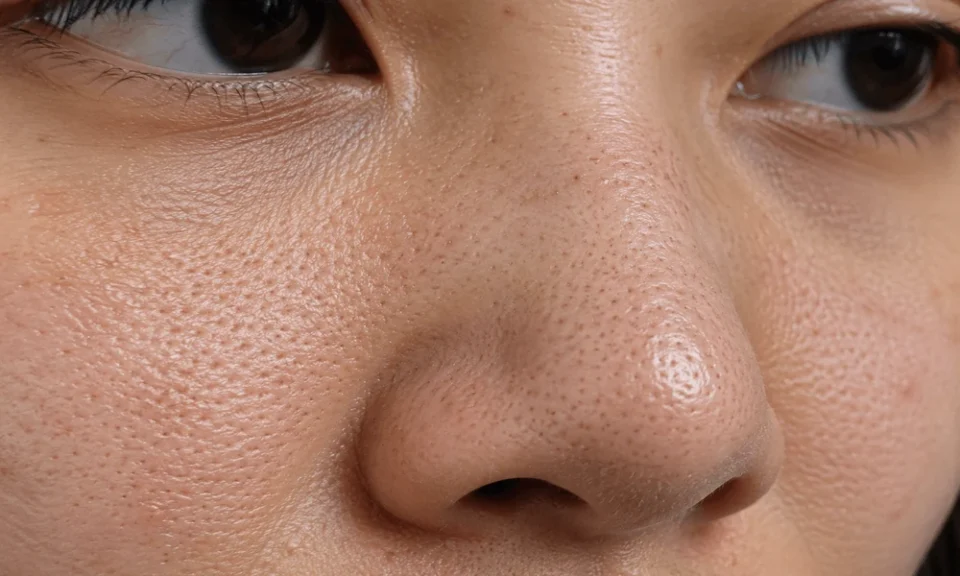
You lean close to the mirror and there they are. Tiny holes across your nose and cheeks that seem to get bigger every summer. Foundation sinks into them. Selfies with the front camera feel brutal.
Large pores are one of the most searched skin worries in Pakistan, and also one of the most misunderstood. Plenty of products promise to “close” or “shrink” pores overnight. None of them can.
What you can do is make pores look much smaller by keeping them clean, smooth and protected. A gentle exfoliant such as a glycolic acid toner plays a big part in that, alongside a few simple daily habits.
Quick answer: You can’t change your pore size, but you can make pores less visible. Clear out oil and dead skin with gentle exfoliation a few nights a week, use light non-comedogenic products, and wear sunscreen every day to protect the skin around each pore. Most people see a real difference in 6 to 8 weeks.
Why Your Pores Look Bigger Than They Are
Every hair follicle on your face has an opening, and that opening is a pore. Pores let natural oil (sebum) reach the surface of your skin. They’re normal and necessary.
The problem isn’t having pores. It’s what makes them stretch and stand out. According to Cleveland Clinic, genetics mostly decides your pore size, but several everyday factors make them look larger.
Extra oil
The nose, forehead and chin have the most oil glands. When oil builds up, it fills and stretches the pore opening. That’s why oily and combination skin types usually notice pores the most.
Dead skin and buildup
Dead skin cells mix with oil and settle in the pore. The plug darkens when it meets air, which is why pores on the nose can look like black dots. A filled pore always looks wider than a clear one.
Heat and humidity
Long, sticky summers in cities like Lahore and Karachi push oil glands into overdrive. More sweat and oil mean more clogged, stretched pores by the end of the day.
Sun damage
UV rays break down collagen, the protein that keeps skin firm. When the skin around a pore loses its firmness, the opening sags and looks larger.
Age and hormones
Skin naturally loses some firmness with age. Hormone changes during the teenage years, around periods and during pregnancy can also raise oil levels and make pores more noticeable.
The Solution: A Routine That Makes Pores Less Noticeable
The plan is simple. Keep pores clear, keep the skin surface smooth, and protect the skin around each pore from the sun. Do those three things steadily and pores start to fade into the background.
How glycolic acid helps
Glycolic acid is an alpha hydroxy acid (AHA). It loosens the bonds between dead skin cells so they shed instead of sinking into pores. With fewer plugs, pores look emptier and smaller. Smoother skin also reflects light more evenly, so the whole face looks more refined.
Cleveland Clinic lists glycolic acid among the at-home exfoliants that help clear dead skin and oil from pores. The American Academy of Dermatology adds that exfoliation should be gentle and suited to your skin type.
Your evening routine
1. Cleanse. Use an oil-free, gentle face wash. If you wore makeup or sunscreen, remove it first.
2. Dry your skin. Pat it dry and wait a minute before the next step.
3. Tone. Sweep the glycolic toner over your nose, cheeks and forehead with a cotton pad. Keep it away from your eyes and lips.
4. Moisturise. Finish with a light, non-comedogenic lotion or gel.
Your morning routine
1. Rinse or wash with a gentle cleanser.
2. Apply a light moisturiser.
3. Use broad-spectrum sunscreen, SPF 30 or higher, on your face and neck.
The U.S. Food and Drug Administration notes that AHAs can make skin more sensitive to the sun, so the sunscreen step matters even more while you use them.
A safe way to start
| Week | Toner use | What you may notice |
|---|---|---|
| 1-2 | 2 nights a week | Slight tingling, softer skin |
| 3-4 | 3 nights a week | Less shine, smoother nose |
| 5-8 | Every other night if comfortable | Pores look cleaner and less obvious |
If you feel burning, see redness that lasts, or start peeling, go back to 2 nights a week.
Daily habits that help
• Blot oil during the day with blotting paper instead of adding powder layer after layer
• Choose products labelled oil-free or non-comedogenic
• Wash your face after the gym or a long day outdoors
• Clean makeup brushes and sponges weekly
• Use a primer made for pores if you wear foundation
Mistakes That Make Pores Look Worse
• Squeezing your nose. Pressing out blackheads stretches the pore and can leave scars. Cleveland Clinic’s dermatologist warns against squeezing and extractor tools for this reason.
• Pore strips every week. They pull out the top of the plug, but they also tug on the skin and the plug soon returns.
• Harsh scrubs. Rough grains irritate oily skin, which can respond with even more oil.
• Heavy, oily creams in summer. Thick textures sit in the pores all day.
• Skipping sunscreen. Sun damage weakens the skin around pores over time.
How Long Before You See a Difference?
• Weeks 1-2: Skin feels softer. You may notice a few small breakouts as pores clear out.
• Weeks 3-5: Less shine through the day. The nose looks cleaner.
• Weeks 6-8: Pores look visibly smaller and makeup sits more smoothly.
Keep going after that. Pores refill if you stop, so think of this as maintenance, like brushing your teeth.
When to See a Dermatologist
An at-home routine helps most people. See a dermatologist if:
• Your pores come with frequent painful acne
• You have deep, pitted scars that look like large pores
• Nothing changes after 3 months of steady care
A dermatologist can suggest options such as prescription retinoids, professional peels or laser treatment.
Frequently Asked Questions
Can pores be closed permanently?
No. Pores don’t open and close like doors. You can only make them look smaller by keeping them clear and keeping the skin around them firm.
Does cold water or ice shrink pores?
Only for a few minutes. Cold makes skin look tighter briefly, but the effect fades quickly.
Is a glycolic acid toner good for oily skin with large pores?
Yes, for most people. Start slowly, use it at night, and pair it with a light moisturiser and daily sunscreen.
Can I use it with niacinamide or vitamin C?
Yes, but start with one new product at a time. Many people use vitamin C in the morning and the toner at night.
The Bottom Line
You can’t swap your pores for new ones, and you don’t need to. Clear, smooth, sun-protected skin makes pores far less noticeable.
Cleanse gently, exfoliate a few nights a week, keep products light, and wear sunscreen daily. Give it two months and look in the mirror again. Most people are pleasantly surprised.
